

The Sound of Freedom: Bankole Thompson Takes the 2026 Detroit International Jazz Festival Stage
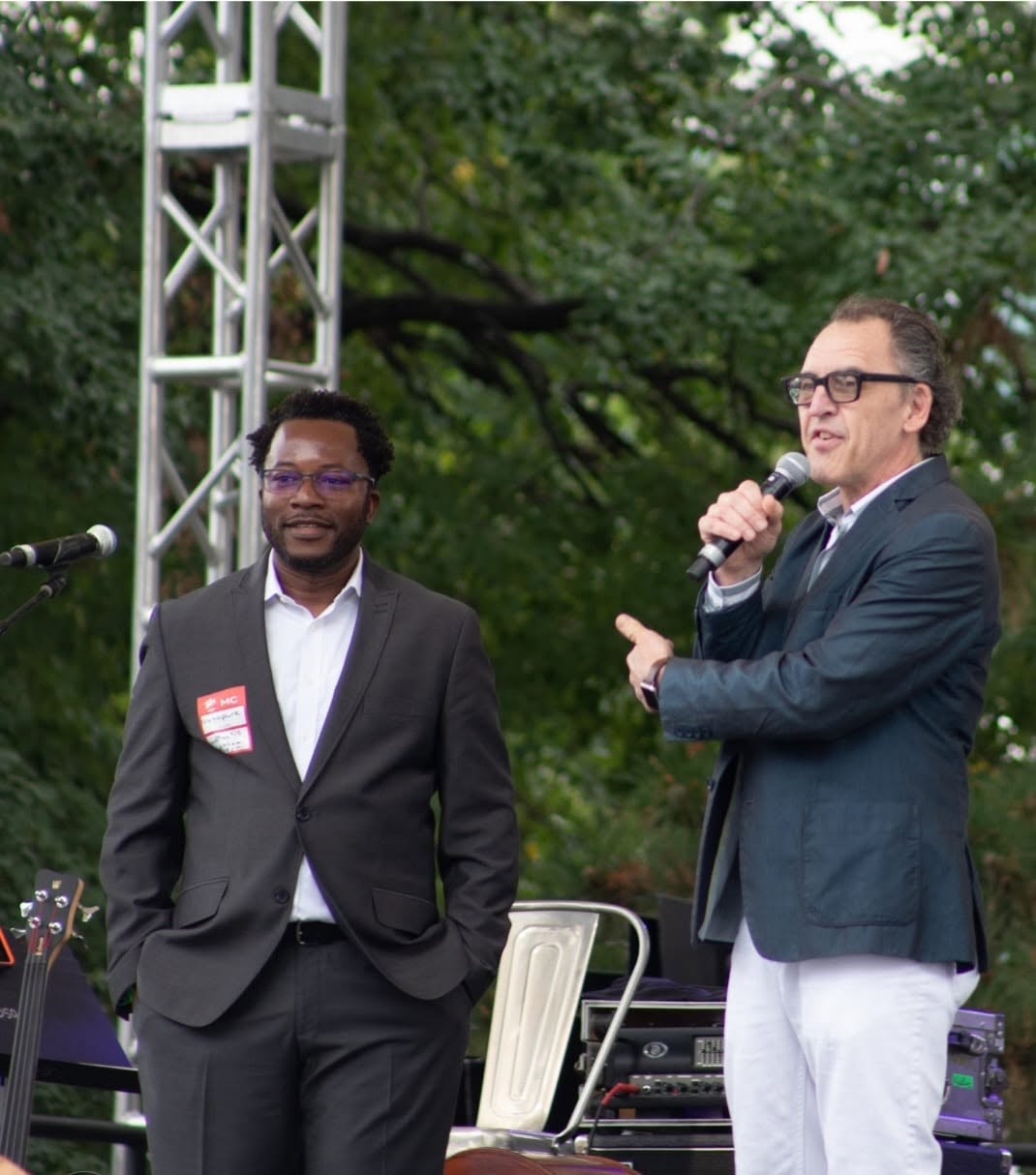
Chris Collins, the President and Artistic Director of the Detroit International Jazz Festival introducing the nationally acclaimed journalist and public intellection Bankole Thompson as Master of Ceremonies at one of the festivals in previous years.
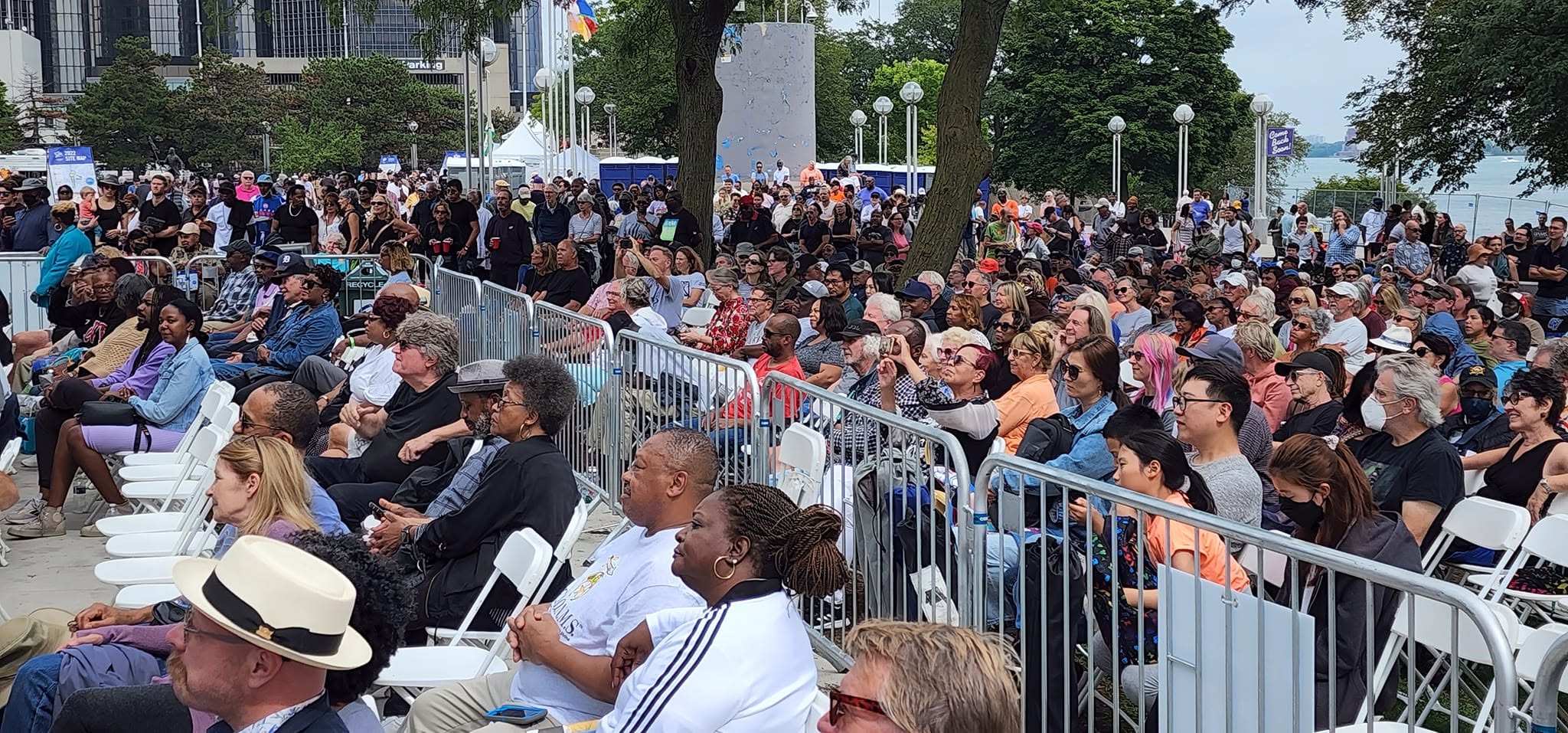
Crowds gathered at the Detroit International Jazz Festival
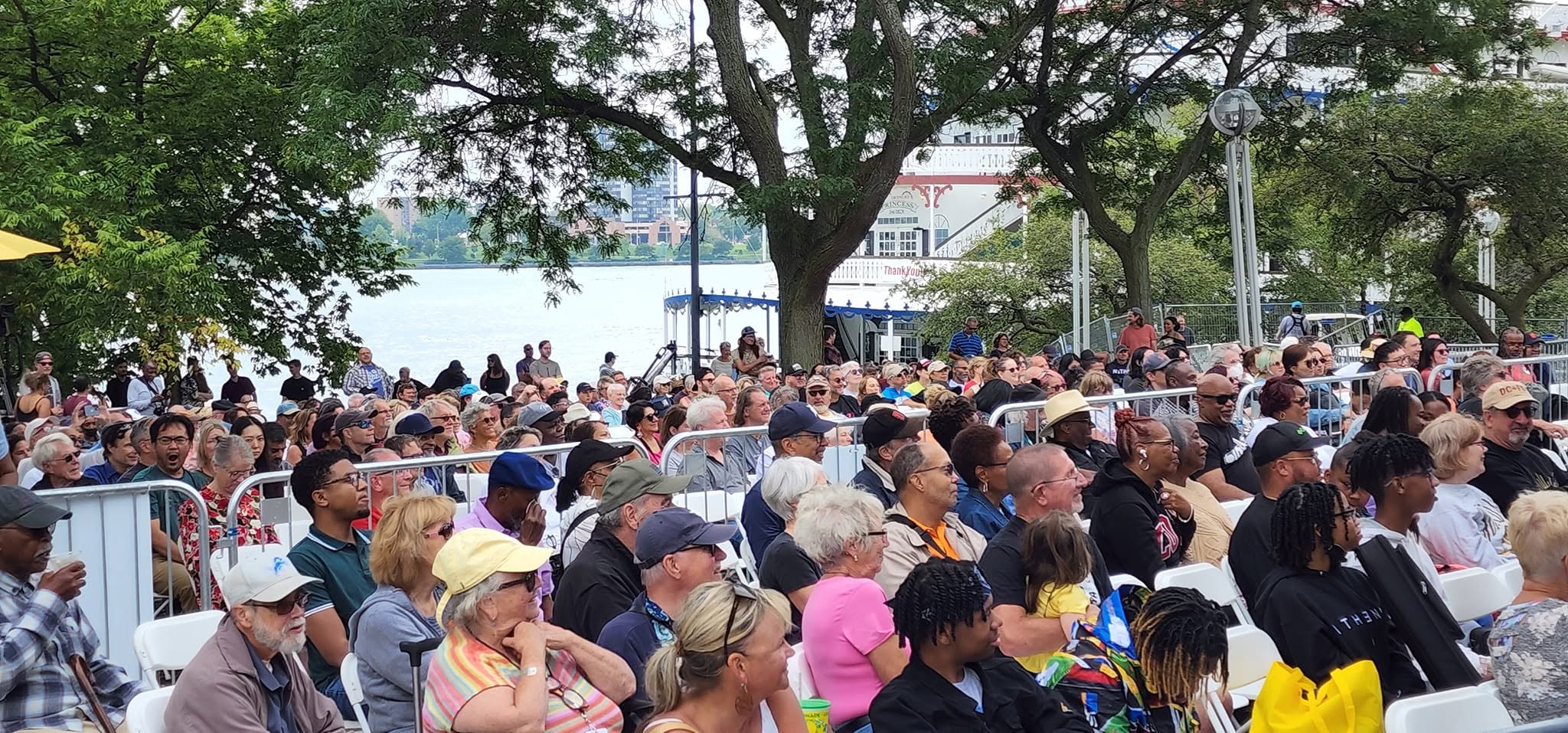
A cross section of jazz fans at the Detroit International Jazz Festival
Nationally Acclaimed Journalist will join Detroit Jazz Festival President and Artistic Director Chris Collins to introduce the J.C. Heard JazzWeek All-Stars
DETROIT, MI, UNITED STATES, September 1, 2026 /EINPresswire.com/ -- Bankole Thompson, the nationally acclaimed journalist, author and public intellectual whose work has spent more than two decades interrogating power, democracy, racial and economic justice and the meaning of human dignity, will serve as a Master of Ceremonies at the 2026 Detroit International Jazz Festival, continuing his longstanding association with one of the city’s defining cultural institutions.The 47th annual Detroit Jazz Festival will take place Sept. 4–7 over Labor Day weekend, bringing four days of jazz to Detroit. The festival, recognized as the world’s largest free jazz festival, will center its three main stages at Hart Plaza this year, with additional programming at the Detroit Jazz Hall inside the Gretchen C. Valade Jazz Center at Wayne State University. The 2026 celebration brings together internationally renowned jazz figures, emerging musicians and Detroit artists in a festival that reinforces the city's historic place in the development and preservation of American music.
Thompson will appear Sunday, Sept. 6, at 1:15 p.m. on the JPMorganChase Stage at Hart Plaza, where he will join Chris Collins, President and Artistic Director of the Detroit Jazz Festival Foundation, to introduce the J.C. Heard JazzWeek All Stars featuring 2026 Youth Jazz Vocal Competition winner Ava Noecker.
Over the years, Thompson has repeatedly served as a festival Master of Ceremonies, including at the Absopure Stage. His appearance this year at the JPMorgan Chase Stage represents another chapter in a relationship between a major Detroit cultural institution and a distinguished thought leader whose public work has consistently examined the forces shaping the life of the city and the nation.
But for Thompson, jazz has never been merely entertainment. It is part of the democratic vocabulary of America.
“Jazz belongs to the history of freedom,” Thompson said. “It emerged from the Black experience in America, but its language ultimately became universal. It carries within it struggle, improvisation, memory, resistance and possibility. In that sense, jazz is inseparable from the larger human-rights story. And there are few cities where that story can be told with greater authenticity than Detroit.”
Jazz As a Language of Freedom
The Detroit Jazz Festival occupies a distinctive place in the cultural life of a city that has helped shape American music, labor, civil rights, industry and political thought.
Detroit gave the world musical traditions that crossed racial, geographic and national boundaries. Its cultural history cannot be separated from the experiences of Black Americans who transformed hardship into extraordinary forms of artistic expression. Jazz emerged from precisely that tradition.
Long before the language of diversity and inclusion became commonplace in American institutions, jazz demonstrated what could happen when individual voices entered a common conversation without surrendering their identities. The music demanded listening. It rewarded improvisation. It created room for dissent. And it showed that freedom did not require uniformity.
That history gives Thompson’s continuing role at the festival particular resonance. His journalism, books, speeches and public commentary have repeatedly examined many of the same questions embedded within the history of jazz: Whose suffering is remembered? What does human dignity require? And what obligations do institutions have toward those who remain outside the gates of opportunity?
Those questions have defined Thompson’s work as a national interpreter of the forces shaping economic justice, an opinion columnist at The Detroit News, author, speaker and founder of The PuLSE Institute, a national anti-poverty think tank examining economic inequality and the responsibility of leadership.
A Relationship Rooted in Mutual Respect
Thompson’s relationship with Collins, the leader of the Detroit International Jazz Festival and an accomplished musician, extends beyond the festival stage.
Collins contributed a chapter to Thompson’s critically recognized 2023 book, “Fiery Conscience,” describing Thompson as a truth-teller and reflecting on the significance of a body of work that has refused to separate journalism from the moral consequences of the issues being reported.
The contribution reflected Collins’ profound respect for Thompson’s overarching work and his willingness to challenge institutions, leaders and the public to confront difficult questions.
“Fiery Conscience” was subsequently reviewed by Forbes and is listed in the Schomburg Center for Research in Black Culture, placing the work within one of the nation’s most important repositories devoted to documenting Black history, thought and culture.
The relationship between Collins and Thompson therefore represents something larger than their shared appearance on a festival stage. It brings together two figures whose respective work, one through music and cultural leadership, the other through journalism and moral inquiry, asks audiences to consider what culture ultimately contributes to the human experience.
Chronicling the Questions at the Center of Humanity
Thompson’s appearance comes during a consequential period in his work as a chronicler of issues at the center of humanity. His writings and public addresses have examined poverty, racial justice, economic inequality, democracy, leadership, civil rights, healthcare, homelessness, workers, hope and the moral responsibilities of institutions.
Most recently, Thompson was invited by the family of Dr. William G. Anderson, the pioneering Black surgeon, civil rights leader and central figure in the Albany Movement who worked with the Rev. Dr. Martin Luther King Jr., to deliver the eulogy at Anderson’s Aug. 25 homegoing service following his death at age 98.
The assignment placed Thompson before another kind of American history. In eulogizing Anderson, Thompson was not simply remembering a distinguished physician. He was interpreting the life of a member of the generation that confronted segregation directly and helped force the nation to reconsider the meaning of its democratic promises.
That moment and Thompson’s presence at the Detroit Jazz Festival, occupy different cultural spaces, but they emerge from a common historical inheritance. The Civil Rights Movement had its speeches and marches, but it also had a soundtrack.
Black music carried the sorrow, defiance, faith and aspirations of people demanding recognition of their humanity. Jazz stands within that larger tradition of cultural expression that helped America hear voices it had too often attempted to silence.
For Thompson, moving from the solemn responsibility of interpreting Anderson’s civil-rights legacy to a Detroit stage celebrating jazz underscores the breadth of his work: chronicling the people, institutions, ideas and cultural expressions through which America continues to wrestle with the question of what human beings owe one another.
Detroit Cannot be Explained Without Music
The significance of the Detroit Jazz Festival also extends beyond the performances themselves. Detroit cannot be fully explained through automobiles, elections, economic statistics or its skyline. It must also be understood through its music. The city's cultural traditions have carried Detroit across generations and around the world. They have provided an alternative archive of the city, one written not simply in documents and institutions, but in sound. That is why the Detroit Jazz Festival remains critical to Detroit.
At a moment when cities across America are debating identity, inequality, belonging and their place in a rapidly changing nation, the festival reminds Detroit that cultural institutions are not ornaments attached to civic life. They are part of civic life.
Jazz preserves memory while refusing to remain trapped in the past. It is simultaneously inheritance and invention. And in a city whose history has repeatedly required reinvention, that makes jazz an especially appropriate expression of Detroit.
For Thompson, serving once again as Master of Ceremonies is therefore not simply an opportunity to introduce musicians. It is an opportunity to stand inside a tradition.
“Some of the most consequential questions about America have never been asked only from podiums, courtrooms, newsrooms or legislative chambers,” Thompson said. “They have also been asked through music. Jazz asked what freedom sounded like before America was prepared to fully answer what freedom required. Detroit has helped keep that question alive.”
ABOUT BANKOLE THOMPSON
Bankole Thompson is a journalist, author, columnist, keynote speaker and public intellectual whose work examines democracy, racial and economic justice, leadership and human dignity. He writes a twice-weekly opinion column for The Detroit News and is the founder and chairman of The PuLSE Institute, a national anti-poverty think tank.
His body of work has included interviews with major national and international leaders including exclusive sit-down interviews with former President Barack Obama, books on political and social questions, keynote addresses before civic and academic institutions, and sustained commentary on the moral responsibilities of leadership.
In 2015, the University of Michigan’s Bentley Historical Library established The Bankole Thompson Papers, an archival collection documenting his work and career, which is a rare honor for a living journalist. He is the first journalist in American history to be appointed to the National Board of Directors of the Southern Christian Leadership Conference (SCLC), the civil rights organization founded by Rev. Dr. Martin Luther King Jr.
Thompson is the author of several books, including the 2023 “Fiery Conscience,” reviewed by Forbes and listed in the Schomburg Center for Research in Black Culture, and the 2026 “HOPE: On The Mountain Of Fear.”
His current work continues a long-running inquiry into the American conscience, an inquiry that moves across politics, economics, civil rights, culture and the lives of individuals whose experiences illuminate the unfinished questions of democracy.
His role at the 2026 Detroit Jazz Festival brings that inquiry into one of America’s oldest languages of freedom: jazz.
BANKOLE THOMPSON
The PuLSE Institute
+1 313-800-0143
email us here
Legal Disclaimer:
EIN Presswire provides this news content "as is" without warranty of any kind. We do not accept any responsibility or liability for the accuracy, content, images, videos, licenses, completeness, legality, or reliability of the information contained in this article. If you have any complaints or copyright issues related to this article, kindly contact the author above.
