

Custom Capacitive Touch Screen for OEM Projects: PCAP Integration, Cover Options, and Equipment Fit with GreenTouch
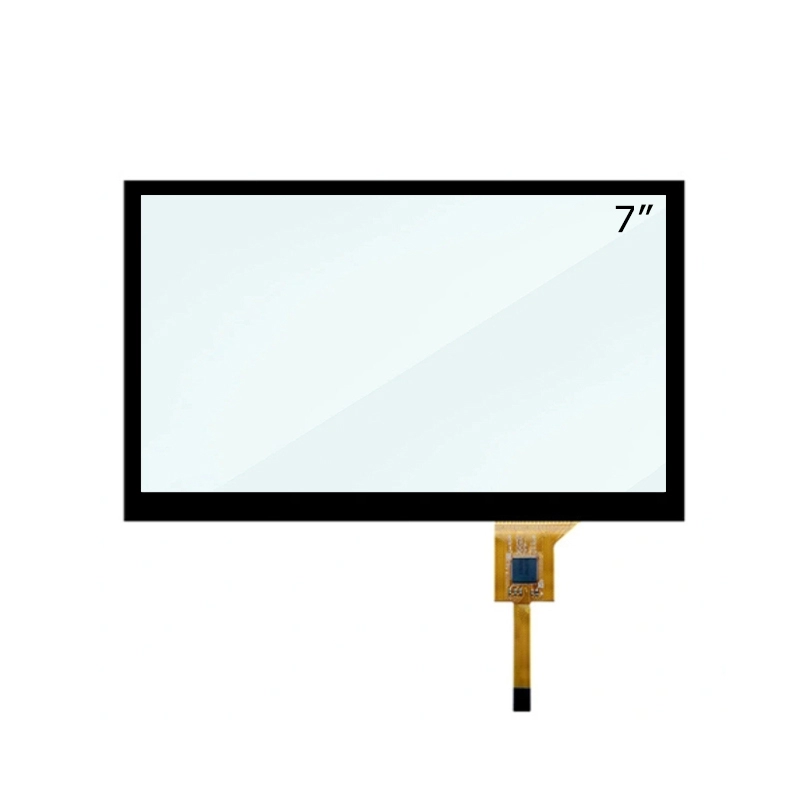
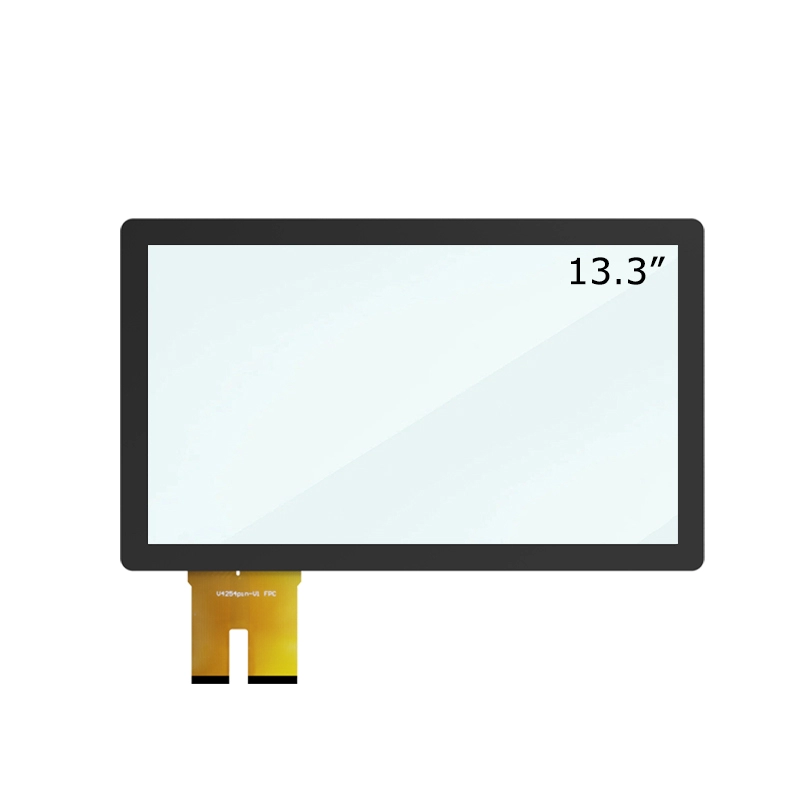
Understand PCAP Sensor Physics and Electrode Architecture
Projected capacitive (PCAP) sensing operates by detecting minute changes in electrical capacitance across an invisible conductive electrode matrix when a conductive object (such as a human finger or passive stylus) approaches the sensor surface.
Electrode pitch is calibrated between 4 mm and 6 mm to balance spatial coordinate resolution with controller processing speed. Transparent indium tin oxide (ITO) conductive grids maintain sheet resistance between 20 and 50 ohms/sq, ensuring optical transmittance exceeds 88%. Advanced PCAP controllers utilize mutual-capacitance architectures, measuring capacitance changes at each intersection of row and column electrode lines to track up to ten concurrent touch points without coordinate ambiguity.
Sensor topologies include Glass-to-Glass (G+G) and Glass-to-Film (G+F) constructions. G+G configurations utilize 1.1 mm or 1.8 mm sensor glass, delivering exceptional optical clarity and mechanical rigidity for outdoor kiosks and medical displays, while G+F structures utilize ultra-thin 0.2 mm optical PET films to provide lightweight, thin profiles for portable hand-held diagnostics and compact control consoles.
Tailor Cover Glass Dimensions, Thickness, and Treatments
Cover glass customization tailors the outer touch surface for mechanical durability, chemical resistance, and visual branding. OEMs specify glass thickness from 1.1 mm for lightweight terminals up to 6 mm or 10 mm for vandal-resistant kiosks, with chemical tempering achieving surface compression CS ≥ 450 MPa and depth of layer DOL ≥ 30 µm to deliver IK08 or higher impact ratings (withstanding 5-Joule impacts).
High-temperature ceramic silkscreen printing permanently bonds opaque border colors, corporate logos, and functional button icons to the rear surface of the cover glass, creating scratch-proof branding that withstands repeated chemical wipe-downs. Precision CNC milling produces custom corner radii, beveled perimeter profiles, and cutouts for cameras, RFID readers, or physical emergency-stop switches.
Surface optical treatments include chemically etched anti-glare (AG) glass to diffuse harsh reflections under high ambient lighting, multi-layer anti-reflective (AR) coatings to reduce surface reflectance below 1.5% and enhance contrast, and anti-fingerprint (AF) oleophobic treatments with water contact angles exceeding 110° to minimize grease accumulation.
Calibrate Firmware for Water Rejection and Glove Use
Operating in demanding field environments requires specialized capacitive touch controller firmware calibration. Industrial workstations and outdoor kiosks expose touch surfaces to water droplets, coolant spray, and airborne moisture films that cause false triggers on standard capacitive panels.
Advanced PCAP controllers execute dynamic digital filtering algorithms that distinguish between the localized capacitive footprint of an intentional operator touch and the dispersed capacitive profile of water droplets, maintaining accurate tracking in wet conditions.
Firmware sensitivity thresholds can also be tuned to support smooth actuation through heavy industrial work gloves (such as leather, rubber, or thermal insulated gloves up to 5 mm thick). Dynamic baseline calibration algorithms continuously sample ambient temperature and humidity, preventing calibration drift across operating temperatures from -20°C to 70°C.
Integrate Flexible Printed Circuits and Signal Shielding
Flexible printed circuit (FPC) tail design represents a critical integration element. Custom tail lengths, exit locations, and pinout assignments ensure clean routing through tight chassis geometries without mechanical strain.
Double-sided copper or silver shielding layers on FPC tails prevent high-frequency digital clock signals from leaking into sensitive analog sensor lines, maintaining high signal-to-noise ratios. Surface-mount transient voltage suppression (TVS) diodes with breakdown voltages from 5V to 12V protect controller inputs from electrostatic discharge (ESD) events up to ±15 kV air discharge.
Execute Cleanroom Optical Bonding for Rugged Assemblies
For outdoor and industrial terminals, direct optical bonding eliminates the internal air gap between the PCAP sensor, cover glass, and LCD panel using optical clear resin (OCR) or adhesive (OCA). Performed in GreenTouch's Class 1000 dust-free cleanroom under controlled environmental conditions (22°C ± 2°C and 50% ± 5% relative humidity), optical bonding permanently eliminates internal reflections, improves outdoor contrast, enhances impact resistance, and prevents moisture condensation between layers.
Navigate International Statutory and EMC Compliance
Deploying customized interactive hardware across global markets requires verifying statutory compliance. GreenTouch PCAP touch modules carry CE mark declarations, FCC Part 15 Class A/B testing, RoHS environmental compliance, and CB scheme electrical safety test certificates under IEC 62368-1. Formal engineering change order (ECO) protocols guarantee component continuity over five to seven years.
FAQ about Custom Capacitive Touch Screens
System engineers and procurement managers regularly evaluate these core PCAP questions during specification planning.
Can PCAP Touch Screens Operate Through Thick Vandal-Resistant Glass?
Yes. By tuning controller excitation voltages and baseline capacitance algorithms, custom PCAP sensors support tempered cover glass up to 6 mm or 10 mm in thickness while maintaining IK08 impact ratings and responsive multi-touch tracking.
What Communication Interfaces Are Standard for Custom PCAP Controllers?
Custom PCAP controllers support dedicated USB HID communication stacks for driverless plug-and-play operation across Windows, Linux, and Android operating systems, alongside I2C interfaces for compact embedded microcontrollers and RS-232 serial ports for legacy industrial platforms.
How Does Optical Bonding Differ from Standard Perimeter Tape Bonding?
Perimeter tape leaves an internal air gap that reflects ambient light and allows internal condensation during temperature transitions. Direct optical bonding fills the air gap with optical adhesive, permanently eliminating internal reflections and increasing structural durability.
Develop Your Custom PCAP Solution with GreenTouch
Developing a custom capacitive touch screen requires coordination between sensor physics, cover glass customization, firmware tuning, and cleanroom optical bonding. GreenTouch provides complete OEM and ODM engineering support, from initial CAD modeling through cleanroom fabrication and volume delivery. System designers and equipment manufacturers can submit project specifications directly at https://www.greentouch.com.cn/ for engineering review and prototype evaluation.
ShenZhen GreenTouch Technology Co.,Ltd.
GreenTouch
Visit us on social media:
LinkedIn
Facebook
YouTube
Legal Disclaimer:
EIN Presswire provides this news content "as is" without warranty of any kind. We do not accept any responsibility or liability for the accuracy, content, images, videos, licenses, completeness, legality, or reliability of the information contained in this article. If you have any complaints or copyright issues related to this article, kindly contact the author above.
