

Traditional Printing Vs Digital Printing -- Baiyi Identification

In the fast-evolving landscape of global manufacturing and industrial packaging, selecting the right printing method is critical for balancing cost, efficiency, and environmental impact. As a leading China Best Digital Printing Machine Supplier, modern production lines increasingly demand advanced solutions that bypass the rigid constraints of legacy equipment. State-of-the-art digital printing systems leverage high-resolution industrial printheads-such as Ricoh G5 arrays-to deliver precise CMYK and multi-color output directly onto diverse substrates like films, PVC, plastics, wood, and coated papers. These sophisticated platforms integrate automated feeding, auto-rectification mechanisms for precise linear alignment, plasma treatment for enhanced ink adhesion, and instant UV curing. This technological leap addresses long-standing industry bottlenecks, paving the way for streamlined, on-demand manufacturing.
Traditional Printing Vs Digital Printing: Core Differences and Operational Dynamics
The manufacturing sector has long relied on conventional analog methods like offset, flexographic, and screen printing. While these techniques remain viable for ultra-large, static print runs, they entail significant setup overheads.
Traditional printing relies heavily on physical plates, complex make-ready processes, and manual color tuning. Each design change requires new plates, resulting in substantial material waste, extended lead times, and high costs for short runs. In contrast, digital printing operates entirely file-to-print. By eliminating physical plates, it empowers manufacturers to execute rapid design switches, variable data printing, and personalized customization without interrupting production workflows.
Traditional Printing Vs Digital Printing: Evaluating Efficiency, Speed, and Cost Structures
Analyzing production metrics reveals distinct operational trade-offs between analog and digital paradigms.
Traditional printing achieves low per-unit costs only when amortized across hundreds of thousands of identical items. However, warehousing pre-printed packaging creates inventory burdens and financial risks if product information changes. Digital printing shifts the economic model toward on-demand execution. Systems equipped with automated friction feeders can achieve stable feeding speeds ranging from 60 to 120 pieces per minute depending on product dimensions, while maintaining printing speeds up to 50 meters per minute. This capability drastically reduces work-in-progress inventory and warehouse footprint.
Traditional Printing Vs Digital Printing: Environmental Impact and Sustainability Pressures
Modern industrial compliance increasingly prioritizes environmental sustainability.
Traditional printing processes generate substantial chemical waste during plate development, cleaning, and ink management. Solvent-based inks also emit volatile organic compounds (VOCs). Digital UV printing utilizes instant UV curing technology, which solidifies ink instantly upon exposure to ultraviolet light without solvent evaporation. This eco-friendly mechanism significantly curtails chemical waste, eliminates plate-making water usage, and aligns with strict international environmental regulations.
Industry Pain Points and the Buyer's Dilemma
B2B export manufacturers face intense pressure from global buyers demanding lower minimum order quantities, faster delivery cycles, and highly customized packaging or product markers.
Traditional analog lines create severe operational friction when handling small, diversified orders. Manufacturers frequently face prohibitive setup fees, prolonged downtime for changeovers, and high scrap rates during color calibration. Furthermore, strict regulatory traceability demands unique serial numbers, barcodes, or regional compliance logos on every single item-a task that is cumbersome and inefficient on conventional printing setups.
Technical Resolution Logic and Engineering Innovation
To bridge this operational gap, advanced engineering integrates intelligent automation with high-precision UV inkjet technology.
Established with a 17-year history in Panyu, Guangzhou, Baiyi Identification has focused its research and development on intelligent feeding machines and UV digital printing systems. Recognized as a High-tech and Innovative Technology Enterprise holding ISO9001, CE certifications, and dozens of patents, the company delivers integrated solutions that replace traditional processes.
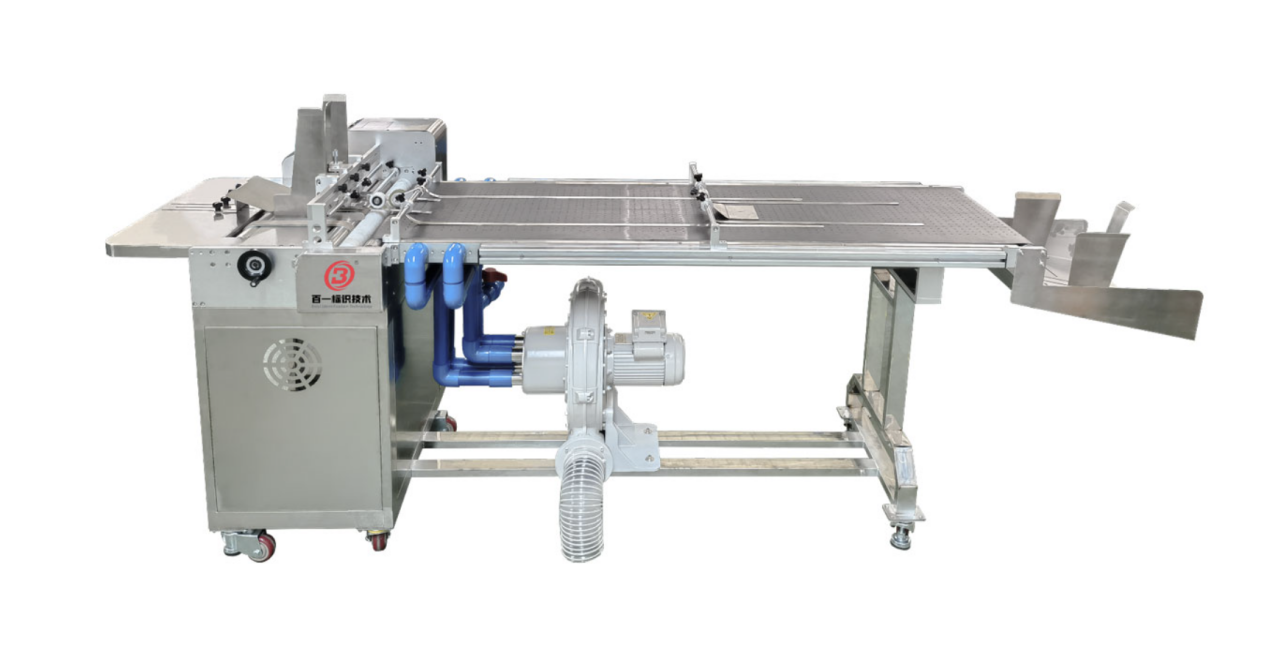
A prime illustration of this technology is the advanced automated UV digital printing platform workflow. Incoming materials loaded into a 100mm to 200mm high magazine are separated via intelligent friction feeding. An auto-rectify system corrects the feeding position to ensure straight-line transit. Materials then pass through a plasma treatment station to optimize surface tension, followed by high-resolution UV digital printing and instant UV drying before automated collection. This end-to-end architecture handles non-absorbent materials up to 600mm in width, consuming approximately 5.5kW at 220VAC.
Application Scenarios and Practical Integration
The versatility of modern digital printing systems extends across multiple industrial sectors, including packaging, promotional items, electronic components, and architectural materials.
For instance, manufacturers producing customized paper bags, insulated thermal bags, non-woven promotional items, and plastic components can seamlessly transition between client specifications without hardware adjustments. By utilizing modular printhead configurations-such as multi-head CMYK setups-operators achieve resolutions ranging from 300dpi to 1200dpi. This ensures sharp typography, accurate brand colors, and crisp variable data encoding on every production batch.
Streamlining Production with Intelligent Systems
Integrating digital printing directly into existing fabrication lines eliminates secondary processing steps. Manufacturers no longer need to outsource short-run customization or maintain massive stockpiles of pre-printed packaging. The synergy of automated feeding, precise material handling, and digital ink deposition transforms custom manufacturing into a streamlined, cost-effective in-house operation.
Optimizing Your Production Line for Digital Efficiency
Transitioning from analog constraints to flexible digital manufacturing requires evaluating current production bottlenecks, material types, and batch size distributions.
Application Requirements: Identify the range of substrate dimensions, daily output volumes, and variable data needs across your product lines.
System Specification: Match feeder capacities, drying power requirements, and printhead configurations (such as CMYK or specialized spot colors) to your facility's operational profile.
For tailored technical guidance or to evaluate custom system integration for your manufacturing facility, explore the official portfolio at https://www.by-ifeeder.com/
Baiyi Identification
Baiyi Identification
Legal Disclaimer:
EIN Presswire provides this news content "as is" without warranty of any kind. We do not accept any responsibility or liability for the accuracy, content, images, videos, licenses, completeness, legality, or reliability of the information contained in this article. If you have any complaints or copyright issues related to this article, kindly contact the author above.
